
Blockage & drainage
Assessing whether a kidney is blocked and how well urine drains, often using diuretic renography.
Renal & Genitourinary Imaging
Kidney and urinary tract studies that show function, not just structure.
Renography, GFR measurement, DMSA scans and related studies to assess how well the kidneys work, how urine drains and whether there is scarring or reflux.
With Dr. Noaline Sinha, Nuclear Medicine & Radiotheranostics.
Artemis Hospital, Sector 51, Gurugram
About Renal Imaging
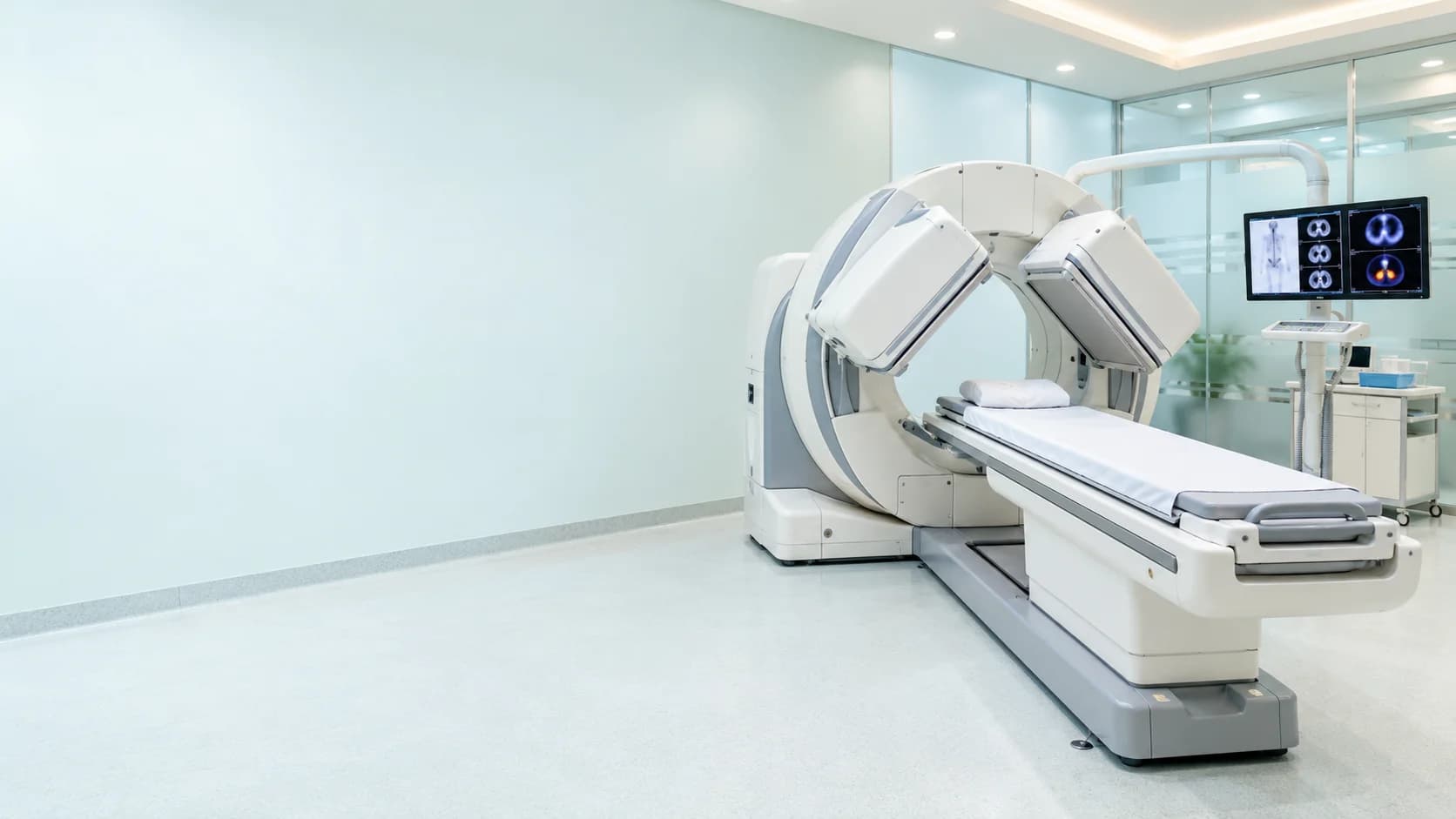
Ultrasound and CT show the structure of the kidneys, while nuclear medicine studies show function: how much each kidney contributes, how quickly urine drains and whether the kidney tissue is scarred. Many of these studies are also performed in children.
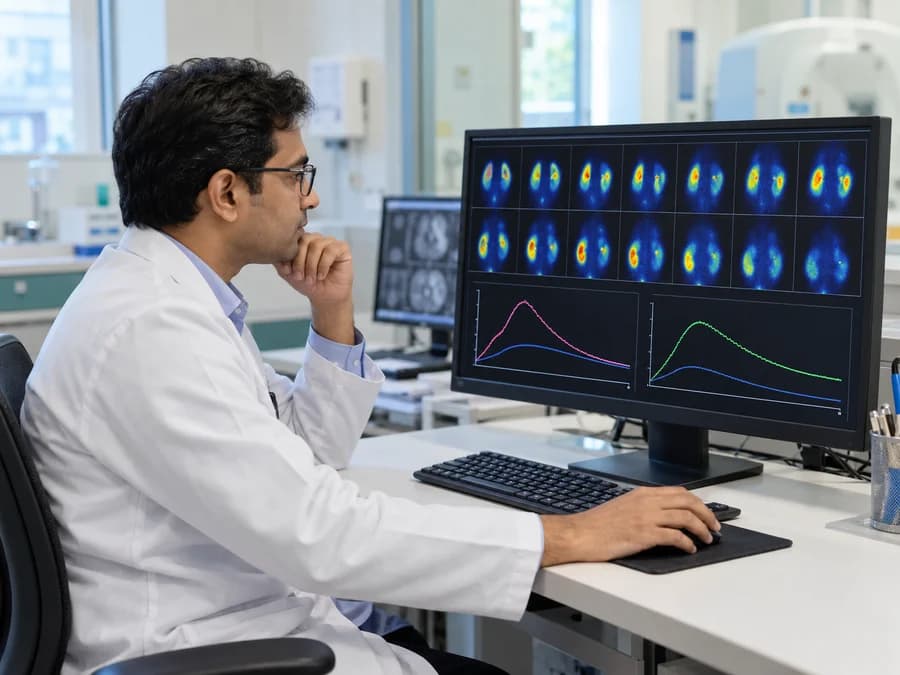
Dynamic renography and differential function studies show how each kidney works and whether urine drains freely.
DMSA scans look for scarring, cystography looks for reflux of urine, and other studies assess blood flow and the testes.
Your doctor will advise which study is appropriate for your clinical question.
Share your details and our team will get in touch.
Studies Included
Each study is chosen to match the clinical question. This list is provided for patients and for referring clinicians.
8 studies
When It May Help
Your doctor recommends imaging based on your clinical needs.
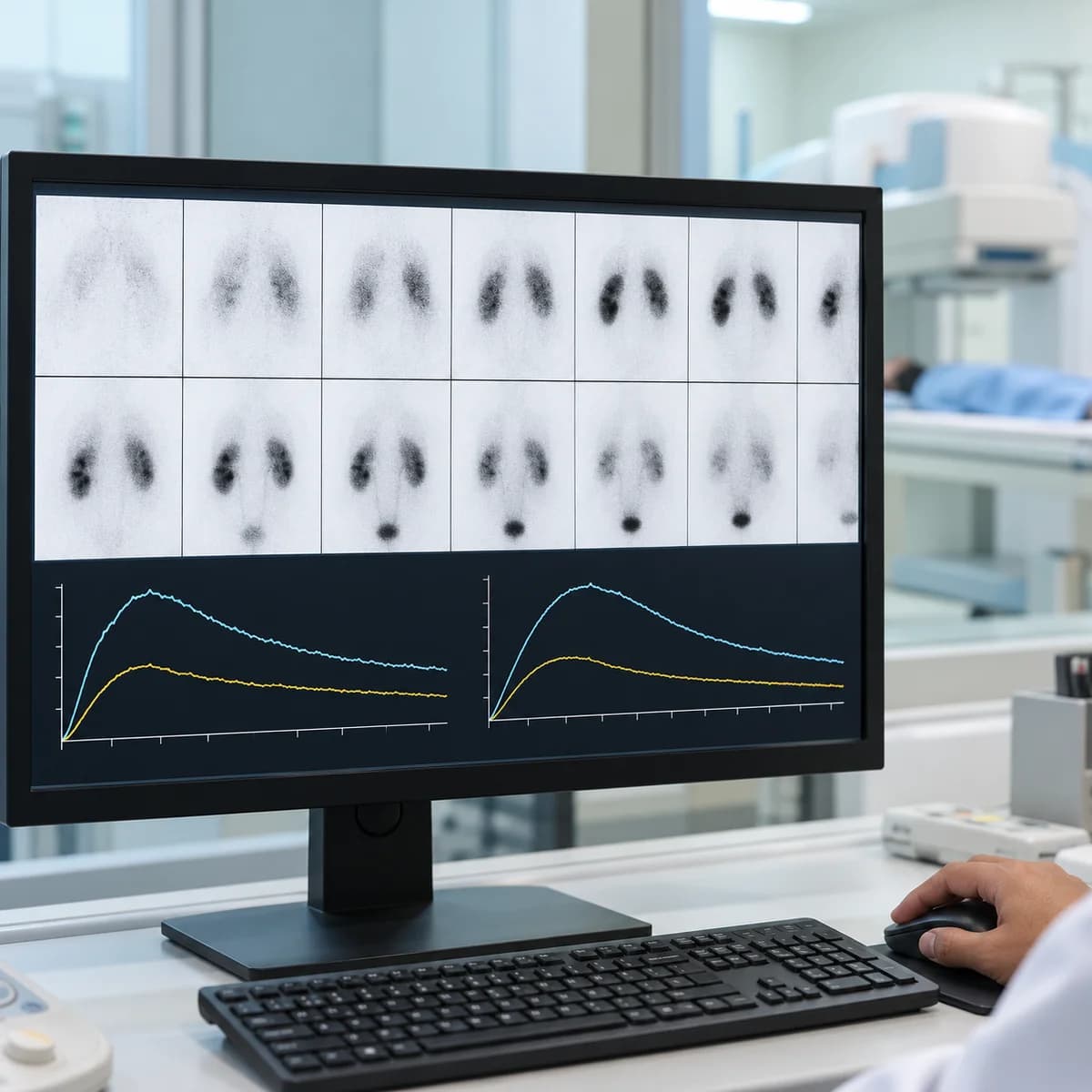
Assessing whether a kidney is blocked and how well urine drains, often using diuretic renography.
Measuring how much each kidney contributes, and total filtration with GFR measurement.
DMSA scans and cystography can help assess kidney scarring and vesicoureteric reflux.
Includes captopril renography, radionuclide venography and scrotal scintigraphy, as advised by your doctor.

Your Visit, Step by Step
What happens during a gamma camera or SPECT-CT visit.
The team reviews your referral and relevant medical history.
A tracer is administered, followed by a resting period.
You lie on the scanner table while images are acquired.
The team explains the next steps and reporting process.
The exact process depends on your scan and clinical needs.
Before Your Visit
Bring the referral, ultrasound or CT reports, and recent kidney function (creatinine) results where available.
Many kidney studies need you to be well hydrated. The team will tell you how much to drink before you arrive.
Tell the team about all medicines, especially diuretics and blood pressure medicines. Do not stop any unless your doctor advises.
If your child is having a study, tell the team their age and any past kidney problems so they can explain what to expect. Some studies, such as cystography, involve a bladder catheter.
Let the team know before your appointment.
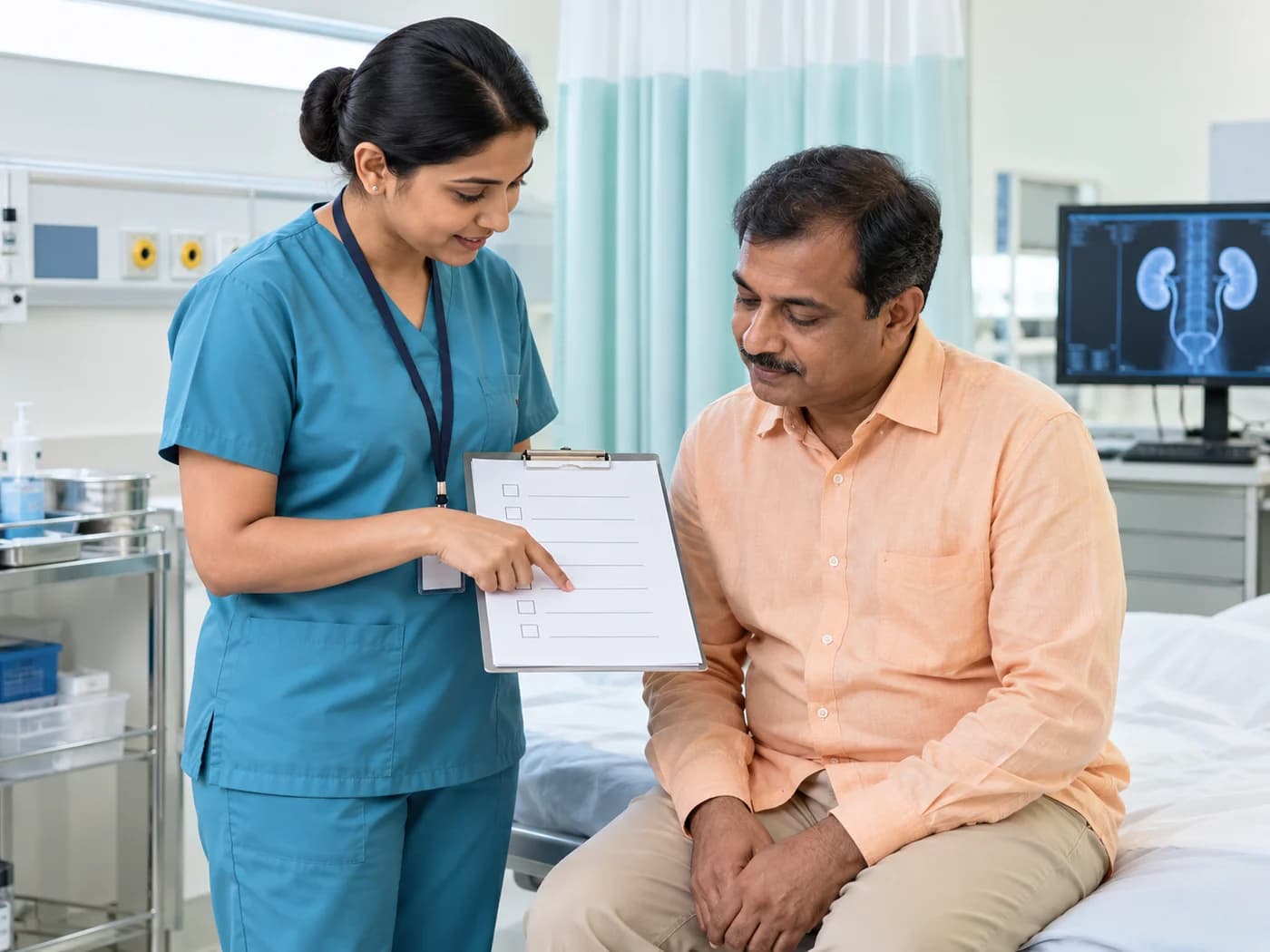
Preparation varies by study. Contact the team if you are unsure about any instruction.

For Referring Clinicians
A short guide for referring doctors.
The clinical question, relevant history, biochemistry or histology where available, and previous imaging reports.
The studies listed on this page are chosen to match the clinical question. If you are unsure which is most appropriate, we are happy to help.
Studies are reported by a nuclear medicine physician, and findings can be discussed with the referring team.
Call or write before referring if you would like to discuss suitability or timing.
Questions before you refer? Contact Dr. Sinha directly.

Your consultant
Chairperson of the Department of Nuclear Medicine & Radiotheranostics, with over 25 years in molecular imaging and radionuclide therapy.
Over 25 years in nuclear medicine, leading the Department of Nuclear Medicine & Radiotheranostics.
Certified Radiation Safety Officer (RSO-II) by the Atomic Energy Regulatory Board.
Works alongside referring and treating clinicians on every case.
Dr. Noaline Sinha
Chairperson, Nuclear Medicine & Radiotheranostics
FAQs
Answers to questions patients and parents often ask before a kidney study.
Being well hydrated helps the kidneys work normally during the study so the result reflects their true function. The team will tell you how much to drink.
A medicine that increases urine flow is given during the study to see whether urine drains freely from the kidney, which helps tell a blockage from a widened but draining system.
The team will explain each step in advance, including any injection or catheter involved. Tell them about your child’s age and medical history when you book.
The time varies by study. The team will tell you what to expect when arranging your appointment.
Nuclear medicine studies use a small amount of radioactivity and the team follows radiation safety practices. Tell the team if you are pregnant or breastfeeding, or think you might be.
Your referring doctor will usually discuss the findings with you. Contact the team about when your report will be available.
More Services
Imaging and therapy services offered by the department.
 Oncology & Molecular Imaging
 Neurological PET-CT
 Cardiac PET-CTInfection, Inflammation & Skeletal ImagingCardiac Nuclear MedicineNeurological Imaging
 Skeletal Imaging
 Hepatobiliary & Gastrointestinal Imaging
 Endocrine Imaging
 Pulmonary ImagingInfection, Lymphatic & Other ImagingRadioiodine Therapy
 Peptide Receptor Radionuclide Therapy (PRRT)
 Prostate Cancer Theranostics
 Other Targeted Radionuclide Therapies
 Therapy Planning, Imaging & Dosimetry

Fill in your details and our team will get back to you to confirm your appointment.

Take the Next Step
Reach out to schedule a personalised consultation or speak with our team. We’re here to guide you with clarity, compassion, and expert care — every step of the way.
Schedule a personalised consultation with Dr. Noaline Sinha at your convenience.
Have questions? Our care team is here to help you with guidance and information.
Consultations are held in person in Gurugram. The team will confirm the details with you.