

Receptor-positive tumours
An option for selected patients whose tumours show receptor uptake on a DOTATATE or DOTANOC scan.
Peptide Receptor Radionuclide Therapy (PRRT)
Receptor-targeted radionuclide therapy for neuroendocrine tumours.
Peptide receptor radionuclide therapy (PRRT) with ¹⁷⁷Lu-DOTATATE for selected patients with neuroendocrine tumours, planned and followed up by a nuclear medicine physician.
With Dr. Noaline Sinha, Nuclear Medicine & Radiotheranostics.
Artemis Hospital, Sector 51, Gurugram

About PRRT
Many neuroendocrine tumours carry somatostatin receptors on their surface. PRRT attaches a radioactive element (¹⁷⁷Lu) to a molecule that binds these receptors, so that radiation is delivered to the tumour cells.

A DOTATATE or DOTANOC PET-CT shows whether the tumour carries the receptors, which helps decide if PRRT is suitable.
PRRT is usually given as a series of treatments, with blood tests and review between them. The team will explain your schedule.
Whether PRRT is suitable is decided after clinical evaluation, together with your oncology team.
Share your details and our team will get in touch.
Therapies Included
Suitability is assessed for each patient after evaluation. This list is provided for patients and for referring clinicians.
1 therapy
When It May Help
Your oncologist recommends treatment based on your diagnosis and clinical needs.
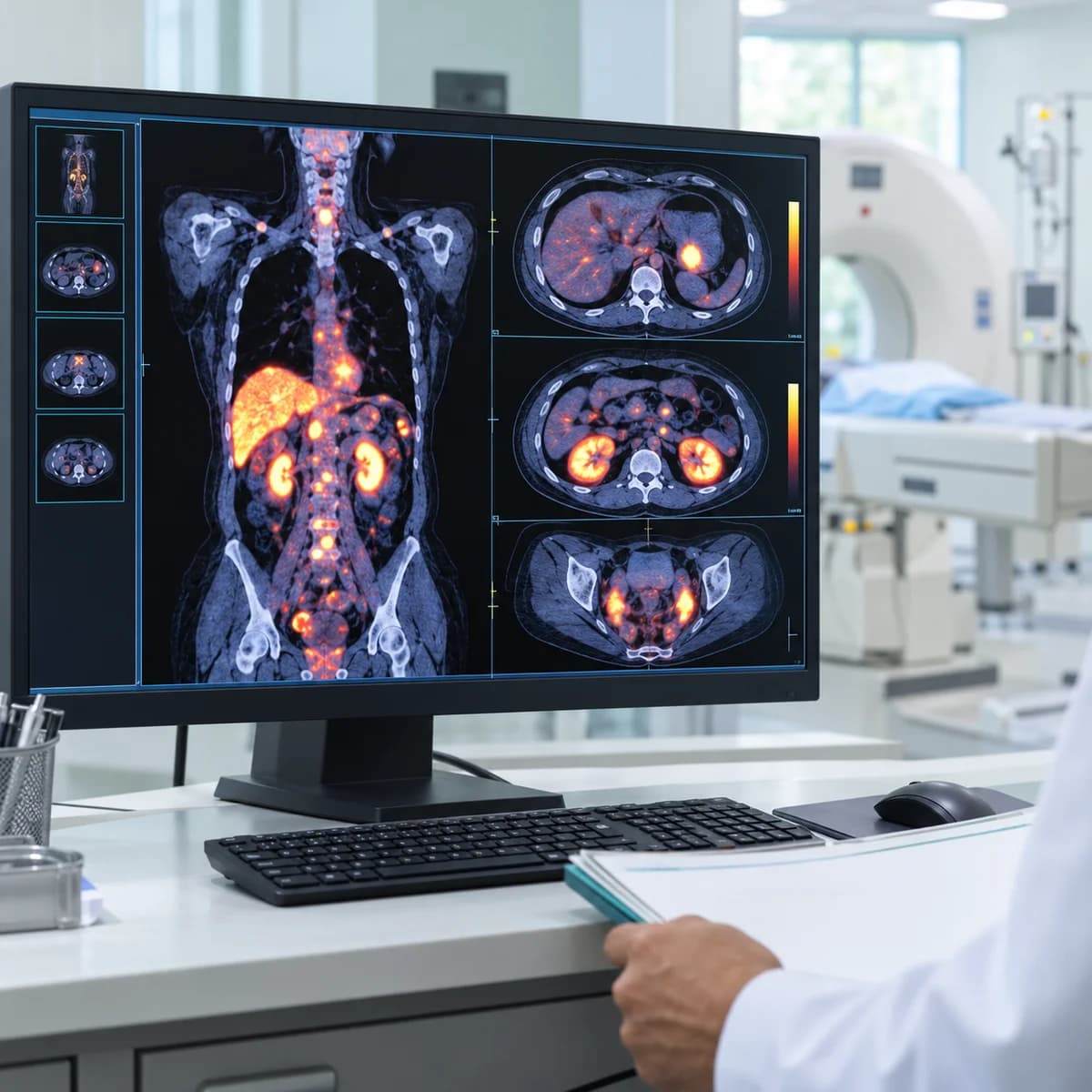
An option for selected patients whose tumours show receptor uptake on a DOTATATE or DOTANOC scan.

Scan findings, blood tests and your general health all help decide suitability.

Blood tests, including kidney and blood counts, are reviewed between cycles.

Response is reviewed with scans and tests, in coordination with your oncology team.

Your Visit, Step by Step
How your PRRT is planned, given and followed up.
The team reviews your reports, history and treatment so far.
A scan may be needed to confirm that the therapy is suitable.
The treatment is planned and given, with safety guidance for afterwards.
Your response is reviewed and next steps are shared with your doctor.
The exact process depends on your condition and the therapy planned.
Before Your Visit
Bring histology, previous scans and your recent DOTATATE or DOTANOC PET-CT reports and images.
Kidney, liver and blood count results are reviewed before each cycle, so bring recent reports and follow the test schedule given to you.
Tell the team about all medicines, including somatostatin analogue injections. The timing of some medicines may need to be coordinated, so do not change any on your own.
A kidney-protective infusion and anti-sickness medicine are commonly given as part of treatment. The team will explain what to expect and how long you will stay.
Let the team know before your appointment.

Preparation varies by therapy and by patient. Contact the team if you are unsure about any instruction.

For Referring Clinicians
A short guide for referring doctors.
The diagnosis, histology, treatment history, recent blood reports and previous imaging, so suitability can be assessed.
Therapy is considered only after a clinical review and, where needed, a diagnostic scan to confirm that it is appropriate.
Treatment is planned with the referring team, and follow-up findings are shared with you.
Call or write before referring if you would like to discuss suitability or timing.
Questions before you refer? Contact Dr. Sinha directly.

Your consultant
Chairperson of the Department of Nuclear Medicine & Radiotheranostics, with over 25 years in molecular imaging and radionuclide therapy.
Over 25 years in nuclear medicine, leading the Department of Nuclear Medicine & Radiotheranostics.
Certified Radiation Safety Officer (RSO-II) by the Atomic Energy Regulatory Board.
Works alongside referring and treating clinicians on every case.
Dr. Noaline Sinha
Chairperson, Nuclear Medicine & Radiotheranostics
FAQs
Answers to questions patients and families often ask before PRRT.
It is considered for selected patients whose tumours carry the target receptors on a scan, after review of their blood tests and general health. The decision is made with your treating team.
A DOTATATE or DOTANOC PET-CT shows whether the tumour carries the receptors that PRRT targets. Without this, treatment would not be planned.
The kidneys can receive some radiation during PRRT, so a protective infusion is commonly given to reduce this. The team will explain how it is done for you.
For a period after treatment your body will contain some radioactivity, so you will be given written guidance, particularly about close contact with children and pregnant women. The team will explain what applies to you.
They can include nausea, tiredness and changes in blood counts. The team will explain the possible effects, how they are monitored and when to contact them.
More Services
Imaging and therapy services offered by the department.
 Oncology & Molecular Imaging
 Neurological PET-CT
 Cardiac PET-CT
 Infection, Inflammation & Skeletal ImagingCardiac Nuclear MedicineNeurological Imaging
 Skeletal Imaging
 Renal & Genitourinary Imaging
 Hepatobiliary & Gastrointestinal Imaging
 Endocrine Imaging
 Pulmonary ImagingInfection, Lymphatic & Other ImagingRadioiodine Therapy
 Prostate Cancer Theranostics
 Other Targeted Radionuclide TherapiesTherapy Planning, Imaging & Dosimetry

Fill in your details and our team will get back to you to confirm your appointment.

Take the Next Step
Reach out to schedule a personalised consultation or speak with our team. We’re here to guide you with clarity, compassion, and expert care — every step of the way.
Schedule a personalised consultation with Dr. Noaline Sinha at your convenience.
Have questions? Our care team is here to help you with guidance and information.
Consultations are held in person in Gurugram. The team will confirm the details with you.