Hyperthyroidism
An option for selected patients, including those with Graves’ disease or an overactive nodule.
Radioiodine Therapy
Targeted ¹³¹I treatment for the thyroid.
Radioiodine (¹³¹I) therapy for an overactive thyroid and for differentiated thyroid cancer, planned and followed up by a nuclear medicine physician.
With Dr. Noaline Sinha, Nuclear Medicine & Radiotheranostics.
Artemis Hospital, Sector 51, Gurugram
About Radioiodine Therapy
Thyroid cells take up iodine from the blood. Radioiodine uses this: a radioactive form of iodine (¹³¹I) is taken up by thyroid tissue and delivers radiation to it, with limited effect on most other parts of the body.
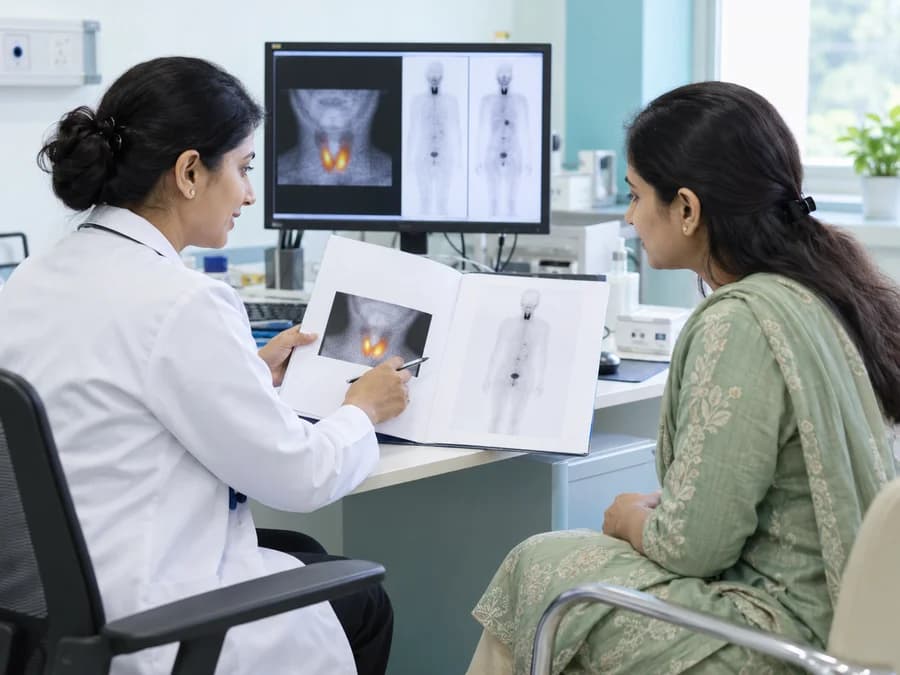
¹³¹I therapy is used in selected patients with hyperthyroidism to reduce the activity of the thyroid gland.
¹³¹I therapy may be used after surgery in selected patients to treat remaining thyroid tissue or disease that takes up iodine.
Whether radioiodine is suitable is decided after clinical evaluation, together with your referring team.
Share your details and our team will get in touch.
Therapies Included
Suitability is assessed for each patient after evaluation. This list is provided for patients and for referring clinicians.
2 therapies
When It May Help
Your doctor recommends treatment based on your diagnosis and clinical needs.
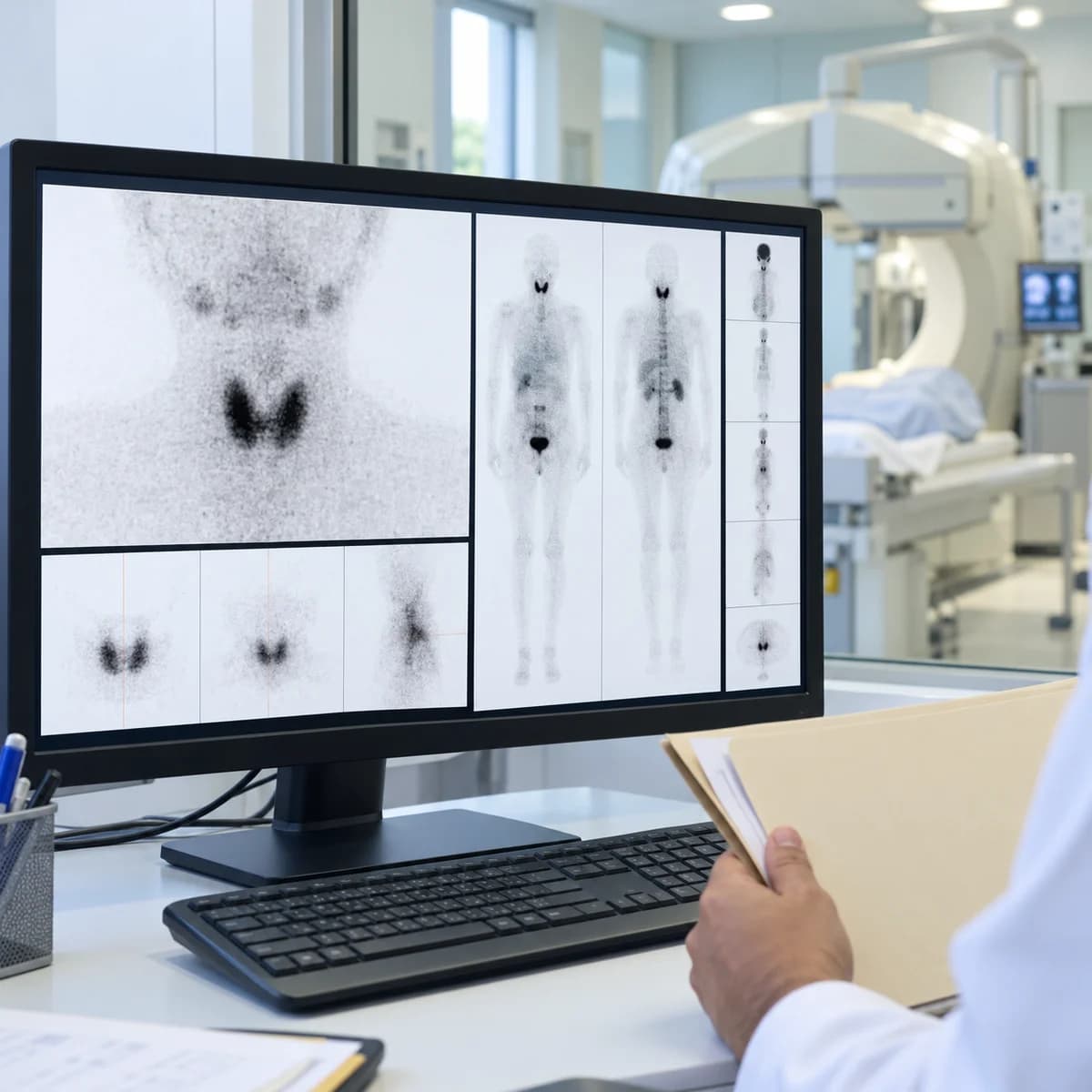
An option for selected patients, including those with Graves’ disease or an overactive nodule.
May be used in selected patients to treat remaining thyroid tissue or iodine-taking disease.
Scans and blood tests help decide whether radioiodine is suitable and how it is planned.

Response is reviewed over time, in coordination with your endocrinologist or oncologist.

Your Visit, Step by Step
How your radioiodine therapy is planned, given and followed up.
The team reviews your reports, history and treatment so far.
A scan may be needed to confirm that the therapy is suitable.
The treatment is planned and given, with safety guidance for afterwards.
Your response is reviewed and next steps are shared with your doctor.
The exact process depends on your condition and the therapy planned.
Before Your Visit
Bring thyroid function tests, ultrasound, scan and, if relevant, surgery and pathology reports.
The team will tell you whether antithyroid medicines or thyroid hormone need to be adjusted before treatment. Do not change any on your own.
You may be asked to follow a low-iodine diet and to avoid iodine-containing contrast and supplements beforehand. The team will explain what applies.
Depending on the treatment, you may need to stay in a dedicated room for a short period or follow precautions at home. The team will explain this in advance.
Let the team know before your appointment.

Preparation varies by therapy and by patient. Contact the team if you are unsure about any instruction.

For Referring Clinicians
A short guide for referring doctors.
The diagnosis, histology, treatment history, recent blood reports and previous imaging, so suitability can be assessed.
Therapy is considered only after a clinical review and, where needed, a diagnostic scan to confirm that it is appropriate.
Treatment is planned with the referring team, and follow-up findings are shared with you.
Call or write before referring if you would like to discuss suitability or timing.
Questions before you refer? Contact Dr. Sinha directly.

Your consultant
Chairperson of the Department of Nuclear Medicine & Radiotheranostics, with over 25 years in molecular imaging and radionuclide therapy.
Over 25 years in nuclear medicine, leading the Department of Nuclear Medicine & Radiotheranostics.
Certified Radiation Safety Officer (RSO-II) by the Atomic Energy Regulatory Board.
Works alongside referring and treating clinicians on every case.
Dr. Noaline Sinha
Chairperson, Nuclear Medicine & Radiotheranostics
FAQs
Answers to questions patients and families often ask before radioiodine treatment.
It is usually taken by mouth as a capsule or a liquid. The team will explain exactly how it will be given for your treatment.
For a period after treatment your body will contain some radioactivity, so you will be given written guidance, particularly about close contact with children and pregnant women. The team will explain what applies to you.
No. Pregnancy must be ruled out before treatment and breastfeeding needs to be stopped. The team will also advise how long pregnancy should be avoided afterwards.
Response is reviewed during follow-up with blood tests and, where needed, scans. The timing depends on the reason for treatment.
This depends on the dose and your work, and the team will advise you based on the precautions that apply to you.
More Services
Imaging and therapy services offered by the department.
Oncology & Molecular Imaging Neurological PET-CT
 Cardiac PET-CT
 Infection, Inflammation & Skeletal ImagingCardiac Nuclear MedicineNeurological Imaging
 Skeletal Imaging
 Renal & Genitourinary Imaging
 Hepatobiliary & Gastrointestinal ImagingEndocrine ImagingPulmonary ImagingInfection, Lymphatic & Other Imaging
 Peptide Receptor Radionuclide Therapy (PRRT)
 Prostate Cancer Theranostics
 Other Targeted Radionuclide Therapies
 Therapy Planning, Imaging & Dosimetry

Fill in your details and our team will get back to you to confirm your appointment.

Take the Next Step
Reach out to schedule a personalised consultation or speak with our team. We’re here to guide you with clarity, compassion, and expert care — every step of the way.
Schedule a personalised consultation with Dr. Noaline Sinha at your convenience.
Have questions? Our care team is here to help you with guidance and information.
Consultations are held in person in Gurugram. The team will confirm the details with you.